Public and Leadership Presentations
1. Democratic Resilience vs. Fascist Fear: Facing Challenges in an Imperfect Republic (1930s-1940s)
How did FDR’s “missionary generation” respond to the threat of anti-democratic (and even Nazi) leaders at home and Nazism abroad? Facing the appeal of totalitarian solutions, disintegration and decay of democratic politics, and economic stress, how did Americans, through FDR’s leadership, discover effective and timely solutions?
2. Building Resilience through Leadership (Professional Organizations)
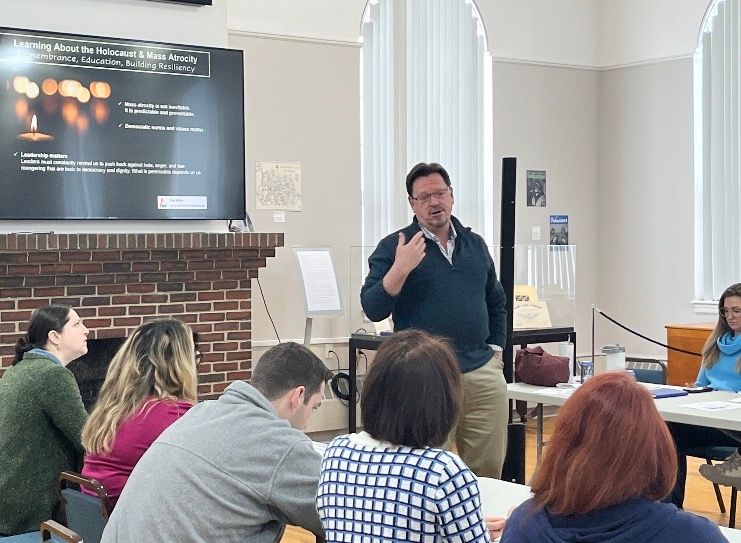
Leaders must constantly remind us to push back against hate, anger, and fearmongering that are toxic to democracy and dignity. What is permissible depends on us. How does exploring bias, hate, antisemitism, and mass atrocities like the Holocaust help us in our personal and professional lives? How do stories of survivors and witnesses help us navigate our lives, shape our decisions, and create more effective workplaces? By facing difficult history, we reinforce democratic values and norms while building resilience.
3. Building Your Own Resilience by Facing Difficult History (Schools)
Hate has nothing to do with the target group but emerges from the needs of those who decide to target people. Hate is destructive and self-destructive because when one hate rises they all do. It erodes freedom and limits choices. So, who tells you to hate, and why? How does bias work? How can we recognize hate and resist and overcome it in our own lives?
4. Eugenics: Bigotry Disguised as Biology
How did an elitist, antidemocratic, race-based, antisemitic ideology became popular and get implemented in the U.S. before Hitler came to power in Germany? What are the connections to and differences between American and Nazi German racism and eugenics practices? How can eugenics history help to confront the threat of racism and white supremacy?