A Betrayal of American Ideals
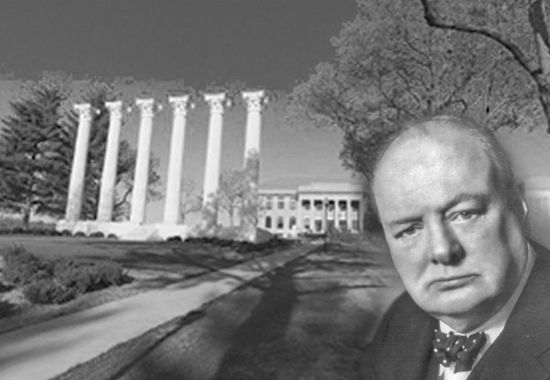
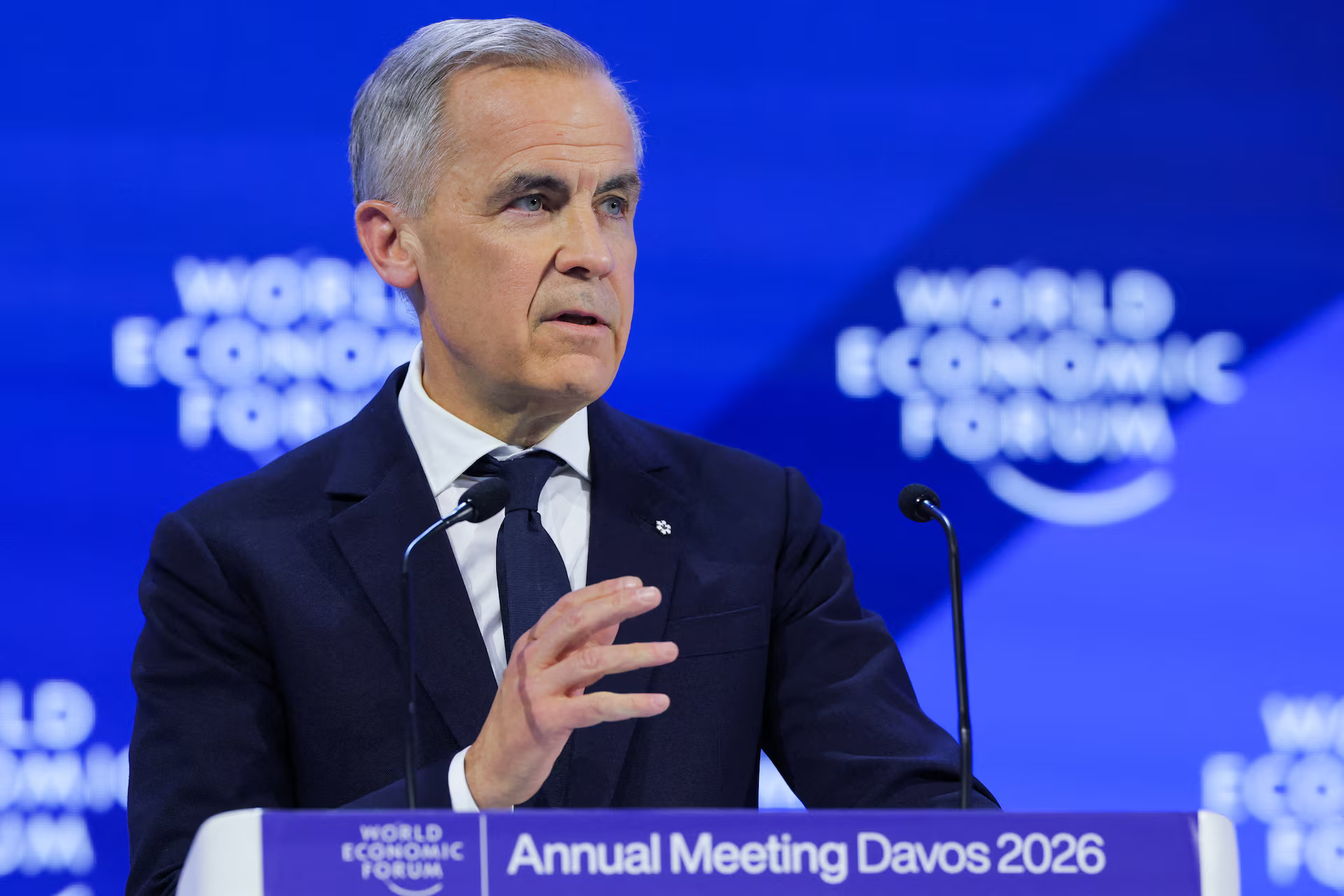
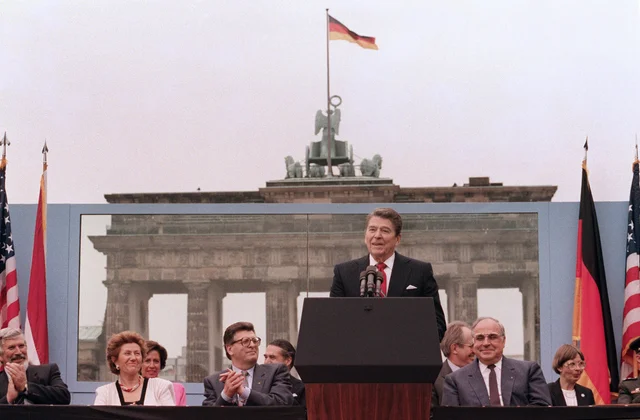
Three speeches stand out for me today. Each shaped our role in the world. The third exposed our betrayal. In 1946 Winston Churchill warned that “From Stettin in the Baltic to Trieste in the Adriatic, an iron curtain has descended across the Continent…Police governments are prevailing in nearly every case.” It was the sobering articulation that Communist evil was subjugating the countries of Europe. He went on to say, “The United States stands at this time at the pinnacle of world power. It is a solemn moment for the American Democracy. For with primacy in power is also joined an awe-inspiring accountability to the future.” We chose to defend democracy against nationalism and build an international system supported by a rules-based order and international institutions. The system prevented a third world war and built peace and prosperity fostered by mutual assistance and trust. We were the symbol of freedom and hope, however imperfect the foundations. In 1987 President Reagan stood at the Berlin Wall that represented fear, police state, and the Cold War and issued a challenge to the Soviet leader, rooted in confidence and hope, “Mr. Gorbachev, tear down this wall.” Democracy, with all its flaws, offered hope while the Soviets represented subjugation, oligarchical cruelty, political repression, incompetence, and corruption. Again, the U.S. was a symbol of hope for humankind. And now, the betrayal. At the World Economic Forum in Davos in January 2026 our president threatened, attempted to humiliate, lied to, and dishonored the very nations that had stood with us and sacrificed for democracy and hope. With Greenland verbiage threatening to undermine NATO and the bizarre pay to play “Board of Peace” full of dictators and autocrats, the U.S. had become a pariah while the murderous Putin smiled. We now represent destabilization, nationalism, disregard of the international system, oligarchical corruption, tyrants over allies, violence, incompetence, arrogance, and intimidation. We have committed potential war crimes on the high seas and have begun to sanction the murder of our own people to benefit and enrich those in power. We have violated sovereignty at home and abroad. We have become the new threat to world order by undermining what had been established through the sacrifices of World War II and the Cold War. We are a threat to peace and hope. Prime Minister Carney’s speech was as honest, concise, direct, and clear as Churchill and Reagan. It was not so much a warning as an acknowledgement of the catastrophic shift. We have accepted the weak position of the bully that “might makes right”. There is a social-Darwinist justification (the Nazis also accepted Spencer’s self-justifying “survival of the fittest” as well) that asserts there are no limits or constraints beyond our own greed. From the beginning of the Republic, we knew this was self-destructive and defeating nonsense. Until now. PM Carney stated, “This bargain [rules-based order] no longer works. Let me be direct. We are in the midst of a rupture, not a transition…more recently, great powers have begun using economic integration as weapons, tariffs as leverage, financial infrastructure as coercion, supply chains as vulnerabilities to be exploited. You cannot live within the lie of mutual benefit through integration, when integration becomes the source of your subordination. For decades, countries like Canada prospered under what we called the rules-based international order. We joined its institutions, we praised its principles, we benefited from its predictability. And because of that, we could pursue values-based foreign policies under its protection. We knew the story of the international rules-based order was partially false that the strongest would exempt themselves when convenient, that trade rules were enforced asymmetrically. And we knew that international law applied with varying rigour depending on the identity of the accused or the victim. This fiction was useful, and American hegemony, in particular, helped provide public goods, open sea lanes, a stable financial system, collective security and support for frameworks for resolving disputes. So, we placed the sign in the window. We participated in the rituals, and we largely avoided calling out the gaps between rhetoric and reality.” We are faced with the challenge of our lifetime. To resist this self-destructive trend for short-term power and reassert our hard-won values. We can, as the PM stated, “build a new order that encompasses our values, such as respect for human rights, sustainable development, solidarity, sovereignty and territorial integrity of the various states.” If we accept a world with growing gaps between poverty and wealth, limited access to goods and services, and reliant of race-based or religious nationalism and territorial expansion we accept a future that may bring back the Thirty Years’ War, World War I, and World War II. Society functions by recognizing that we are in a social contract with one another. We cannot simply do whatever we want. We accept laws as reasonable. We obey traffic lights or push our shopping cart on the right side of the aisle. We navigate life together because we live together. The argument of the Trump administration that grabbing what you want because you can is fool’s gold. Our Republic was established to interfere with the mentality of exploitation and tyranny that caused so much suffering. The Bill of Rights is meant to protect the weak and vulnerable not the powerful. https://www.youtube.com/watch?v=JnE2HTfDivQ PM Carney challenges us with the story of Czech dissident Václav Havel, later president, who wrote an essay called “The Power of the Powerless”. In the essay Havel points out that the Communist system sustained itself through participation of everyday people who were just trying to survive. They knew that what they were accepting was a lie but tried to live with it and pretend it was true. This is what also made the system fragile. A world of fortresses will be poorer, more fragile and less sustainable. And there is another truth. If great powers abandon even the pretense of rules and values for the unhindered pursuit of their power and interests, the gains from transactionalism will become harder to replicate. Collective investments in resilience are cheaper than everyone building their own fortresses. Or, to put another way, we aim to be both principled and pragmatic – principled in our commitment to fundamental values, sovereignty, territorial integrity, the prohibition of the use of force, except when consistent with the UN Charter, and respect for human rights, and pragmatic and recognizing that progress is often incremental, that interests diverge, that not every partner will share all of our values. So, on Ukraine, we're a core member of the Coalition of the Willing and one of the largest per capita contributors to its defence and security. On Arctic sovereignty, we stand firmly with Greenland and Denmark, and fully support their unique right to determine Greenland's future. Our commitment to NATO's Article 5 is unwavering, so we're working with our NATO allies, Canada strongly opposes tariffs over Greenland and calls for focused talks to achieve our shared objectives of security and prosperity in the Arctic. But when we only negotiate bilaterally with a hegemon, we negotiate from weakness. We accept what's offered. We compete with each other to be the most accommodating. This is not sovereignty. It's the performance of sovereignty while accepting subordination. In a world of great power rivalry, the countries in between have a choice – compete with each other for favour, or to combine to create a third path with impact. First, it means naming reality. Stop invoking rules-based international order as though it still functions as advertised. Call it what it is – a system of intensifying great power rivalry, where the most powerful pursue their interests, using economic integration as coercion. It means acting consistently, applying the same standards to allies and rivals. When middle powers criticize economic intimidation from one direction, but stay silent when it comes from another, we are keeping the sign in the window. Canada is a pluralistic society that works. Our public square is loud, diverse and free. Canadians remain committed to sustainability. We are a stable and reliable partner in a world that is anything but.. A partner that builds and values relationships for the long term. And we have something else. We have a recognition of what's happening and a determination to act accordingly. We understand that this rupture calls for more than adaptation. It calls for honesty about the world as it is. We are taking the sign out of the window. We know the old order is not coming back. We shouldn't mourn it. Nostalgia is not a strategy, but we believe that from the fracture, we can build something bigger, better, stronger, more just. This is the task of the middle powers, the countries that have the most to lose from a world of fortresses and most to gain from genuine cooperation. The powerful have their power. But we have something too – the capacity to stop pretending, to name reality, to build our strength at home and to act together.