Warehousing “Enemies of the State”: Echoes of Dachau
Totalitarian regimes seek to normalize the abnormal. Over time our senses are dulled and the norms shift. We are at the beginning of that process. What if I told you that proposed ICE detention warehouses echo 1933 Nazi Germany? Hyperbole? The little boy who cried wolf? Or a clarion call that now is the moment to intervene and exert our democratic power to stop the escalating process?
Again, we compare things to the past so that we can contrast them to the present and ask questions. We live in a fundamentally different time. However, the echoes cannot be wished away. We need to listen to be aware of how this process escalates and who does the escalating.
Nazi concentration camps began in earnest in 1933. After the Reichstag Fire Decree (that suspended the Constitution) and the Enabling Act (which gave Hitler legal authority), police and paramilitaries were given the green light by the government to target whoever they wanted. There were many wild and competing camps until Heinrich Himmler, head of the SS, saw an opportunity. Himmler saw himself in competition for power and favor with other Nazi officials such as Hermann Göring, chief of the Prussian police and Ernst Röhm, head of the paramilitary SA (“Brownshirts”). He knew, as a relatively unknown, micromanaging yet brilliant administrator, that Nazi leaders defined themselves in degrees of loyalty to Hitler. What if the emerging camps could be coordinated under him and he could offer something to Hitler that demonstrated his loyalty? His opportunity came at Dachau.
“Preventative Arrest” President Hindenburg’s statute of “preventative arrest” gave him his opening. German states were wrestling for legal control and oversight over the emerging camp system (mostly political prisoners) with Interior Minister Frick and Göring. Göring saw himself as Hitler’s fixer and had created a network of “wild” concentration “detention” camps to deal with political enemies. His “Prussian model” was intended to rapidly round up opponents, without trial, utilizing the police and civil service under control of the Interior Ministry. He purged the police of anti-Nazi elements. Concerned with his international reputation and wanting to distance himself from the extra-legal torture camps, he began to work more within the system and required SA/SS men to become civil servants.
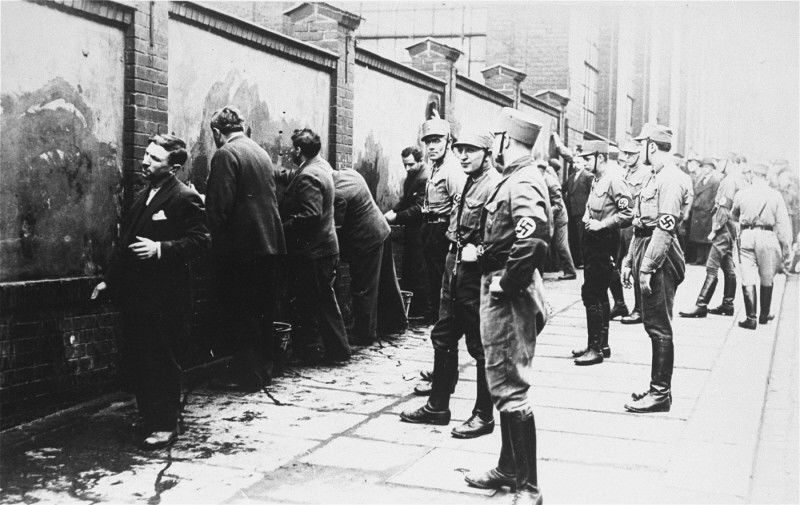
Dachau Himmler recognized that SA terror sometimes worked against Hitler’s goal of looking like a legitimate leader and not a mafia-type thug. What if he could make terror look more respectable?
On March 11, 1933, Himmler’s SS political guards replaced Bavarian state police in an abandoned munitions factory and makeshift camp for political prisoners at Dachau, near Munich. If he ran the camp efficiently he could develop his own power base within the internecine fighting of those “working towards the Führer”. He was keen in framing his justification for SS control by promoting the takeover as his way of helping an overburdened prison system overwhelmed with arrests being encouraged by the government.
His March 12, 1933, press statement argued:
On Wednesday the first concentration camp is to be opened in Dachau with an accommodation for 5000 people. All Communists and—where necessary Reichsbanner and Social Democratic functionaries who endanger state security are to be concentrated here, as in the long run it is not possible to keep individual functionaries in the state prisons without overburdening these prisons [with protective custody prisoners], and on the other hand these people cannot be released because attempts have shown that they persist in their efforts to agitate and organize as soon as they are released.
And so, the SS would help the existing state prison system “accommodate” political opponents of the regime. The SS even went so far as to argue that this would be “rehabilitation centers” for Germans who had lost their way.
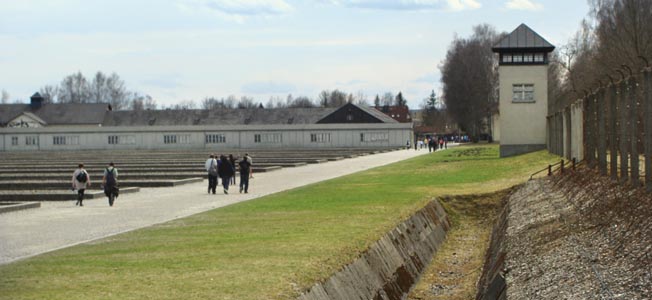
First Murders That afternoon the Bavarian State solicitor's office received a report that four prisoners had died the first day of the SS takeover (shot while “trying to escape”). So much for rehabilitative accommodation!
Indictments At that time, any death in State custody (other than from natural causes) had to be investigated. At this stage, death was relatively rare. In April, Bavarian Deputy State Prosecutor Josef Hartinger, together with his medical examiner colleague, Moritz Flamm, investigated Dachau and realized instantly that all four were Jews and they had been executed. In June, Hartinger presented the case to his superior, Bavarian State Prosecutor, Karl Wintersberger. Initially supportive of the investigation, Wintersberger was reluctant to take on the SS. He signed indictments for murder for camp commandant Hilmar Wäckerle and others, but only after first notifying Himmler as a courtesy.
Himmler knew that this could ruin him and his plan to use Dachau as a model camp to expand into an empire of camps. The SS had no right to kill under German law in 1933. Himmler likely ordered the killings stopped and had Wäckerle transferred. It seemed that justice had won and the SS had been reigned in. But Himmler knew of Hitler’s contempt for legal constraints and norms. He pledged his loyalty to Hitler and Hitler promised that no SS would end up in jail. The Hartinger file disappeared into a desk drawer where it was discovered after the war and used as evidence at the Nuremberg trials.
The SS Adjusts Himmler appointed the bizarre Theodore Eicke as new commandant and ordered Eicke to re-organize the concentration camp system. Civilian directors (Göring’s “Prussian model”) were replaced and the first massacres at Dachau began. Eicke introduced forced labor as a way to make money for the SS and SS Death’s Head units begin to run the camps. By July the SS became independent and took over state political police forces (except in Prussia). Many early camps closed and the SS took over camps like the SA-run Oranienberg in Berlin by force.
To summarize: Hitler loved Himmler’s praise, loyalty, and initiative and protected him from state prosecution. The SS created its own fund-raising capability and received funds from government coffers. Himmler’s ambition encouraged him to expand the camp system by seeking out “enemies of the state”. The more that could be applied and expanded the better for Himmler and the SS.
ICE We are not Nazi Germany, nor do we seek to mass murder people. However, those loyal to the president are working with an organization that is heavily funded by the government.
Concerningly, ICE has apparently already committed murder and been shielded by the government. Unlike 1933, we still have power to push back. ICE’s goal is to build an extensive camp system in the U.S. to “protect us” from “enemies from within.” Prisons (and this administration is promoting privately-run, incentive-laden prisons) are difficult to operate. In addition to the economic burdens communities face we know that these sorts of places radicalize the leadership and those working within them. The outcomes of warehousing people deemed as state enemies, in poorly equipped spaces, is easily predictable. The horror will escalate.
In July 2025, a Republican Congress passed the “Big Beautiful Bill” which allocated approximately $75 billion in new funding to ICE over four years. This surge included $45 billion for detentions and $30 billion for operations. In 2025, ICE plans to spend 38.3 billion to boost detention facilities capacity to 92,000. Across the nation, cities and towns are discovering secret deals being made to buy warehouses as detention and transportation centers. There is shock, fear, and unlike Nazi Germany, widespread public resistance.
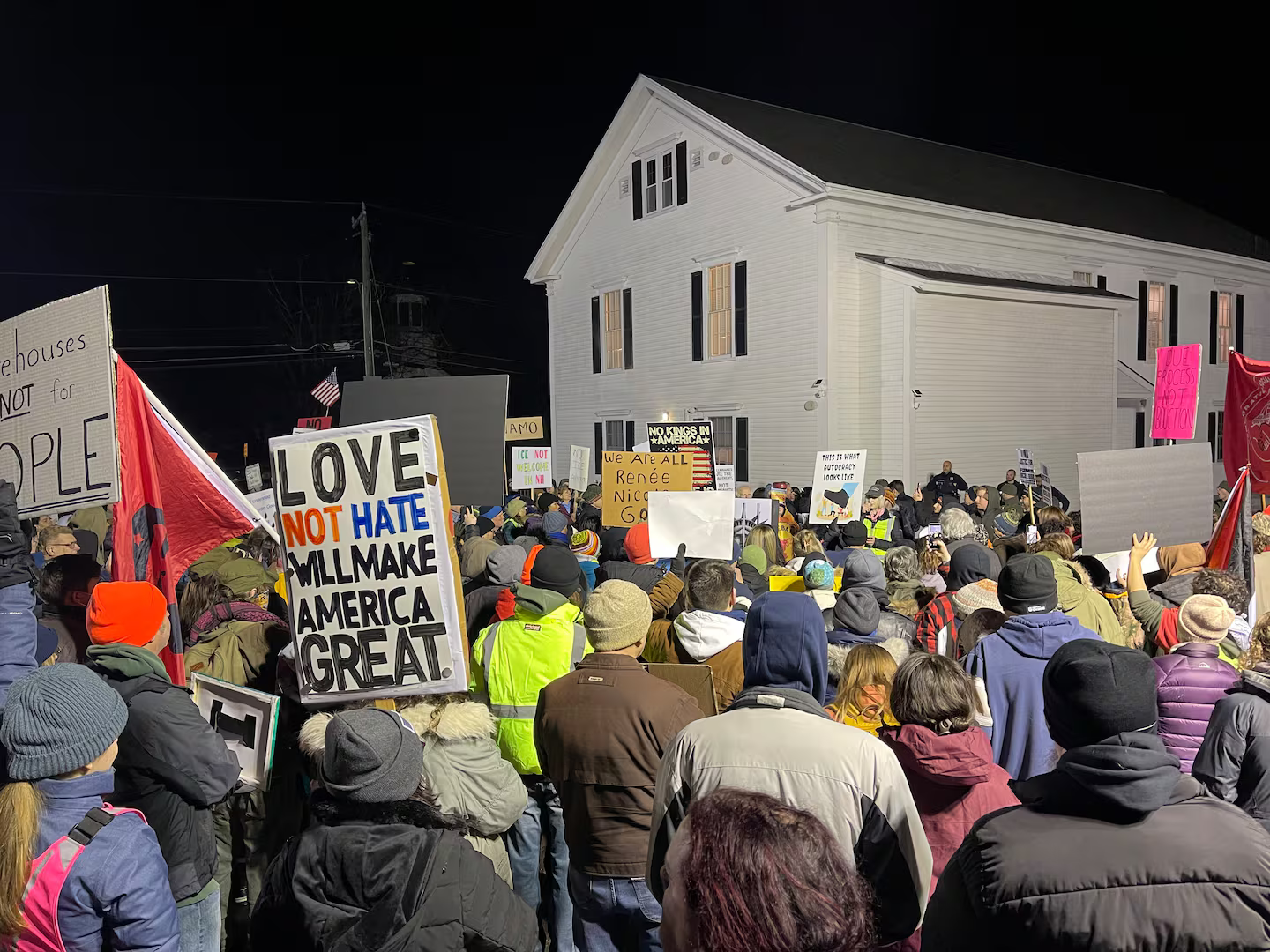
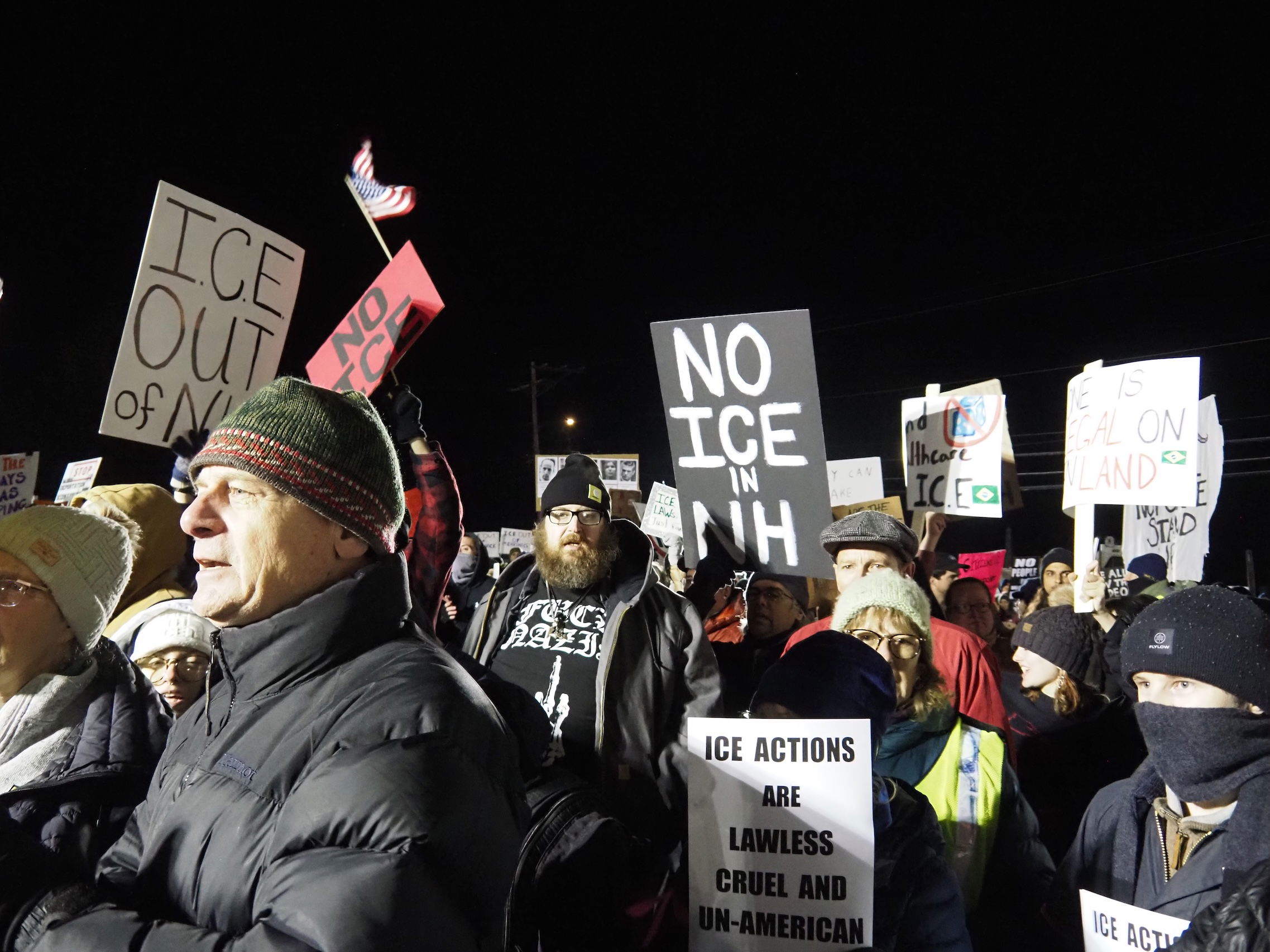
New Hampshire ICE plans to spend $158 million this year to convert an empty 324,000-square-foot industrial warehouse in Merrimack, NH into a 400-to-600 bed processing facility. Detainees would spend three to seven days before being transferred for deportation to much larger facilities being constructed. The echoes are disturbing and yet Governor Ayotte has been coy about her knowledge of ICE’s plan and has yet to publicly oppose it.

My Turn We are at the beginning of an antidemocratic process that will escalate its agenda of internal terror unless we stop it. Despite the huge consignment of taxpayer money, large internment facilities will overwhelm ICE’s ability to provide basic human needs to those incarcerated without trial. This will dehumanize inmates more and encourage radicalization against them – especially when sanctioned by the government.
Dismissal of Border Patrol Commander Gregory Bovino from Minneapolis is a good start but not the end game. ICE will learn how to appear to work within the system. We cannot normalize their hidden identity, blind-eye recruited, extra-legal terror.
We have significant power to keep the pressure on and hold our elected officials accountable. There were large protests in Merrimack, NH this week in opposition to the ICE warehouse purchase. The opposition will continue to grow as Americans know that this violates the basic values and norms of our Republic. Politicians, forced out of the darkness, will react to their constituents. The justice system, although showing cracks, will hold.
Some main differences between 1933 and now is that we have more than a handful of state prosecutors trying to stop extra-legal concentration camps. The leader is old and less able to hide his bizarre behavior and self-serving beliefs. The courts have begun to check his excesses. Many Americans are being directly impacted by his absurd economic policies. Most importantly, democratic loving citizens are saying “not in my name”. The momentum is on the side of democracy because tyranny is unacceptable.
Addendum: This was said today by the president. I had to double check to be sure, but not surprised. It is clear that he will use the camp system for expanded targeted groups. In 1933 the Nazis quickly expanded "preventative custody" prisoners to "asocials" (which included the unemployed).
https://www.facebook.com/