Hoping For Beloved Community
I recently returned from our annual meeting of the Association of Holocaust Organizations at the United States Holocaust Memorial Museum. Before I drove home I had chose to visit the FDR and MLK memorials, a pilgrimage of sorts. This morning I was honored to attend Keene's annual Civic Leaders Breakfast hosted by the Community Kitchen and in honor of Keene’s martyred son, Jonathan Daniels. The breakfast and especially our speaker made me rethink what I was going to write. I have many beloved communities.
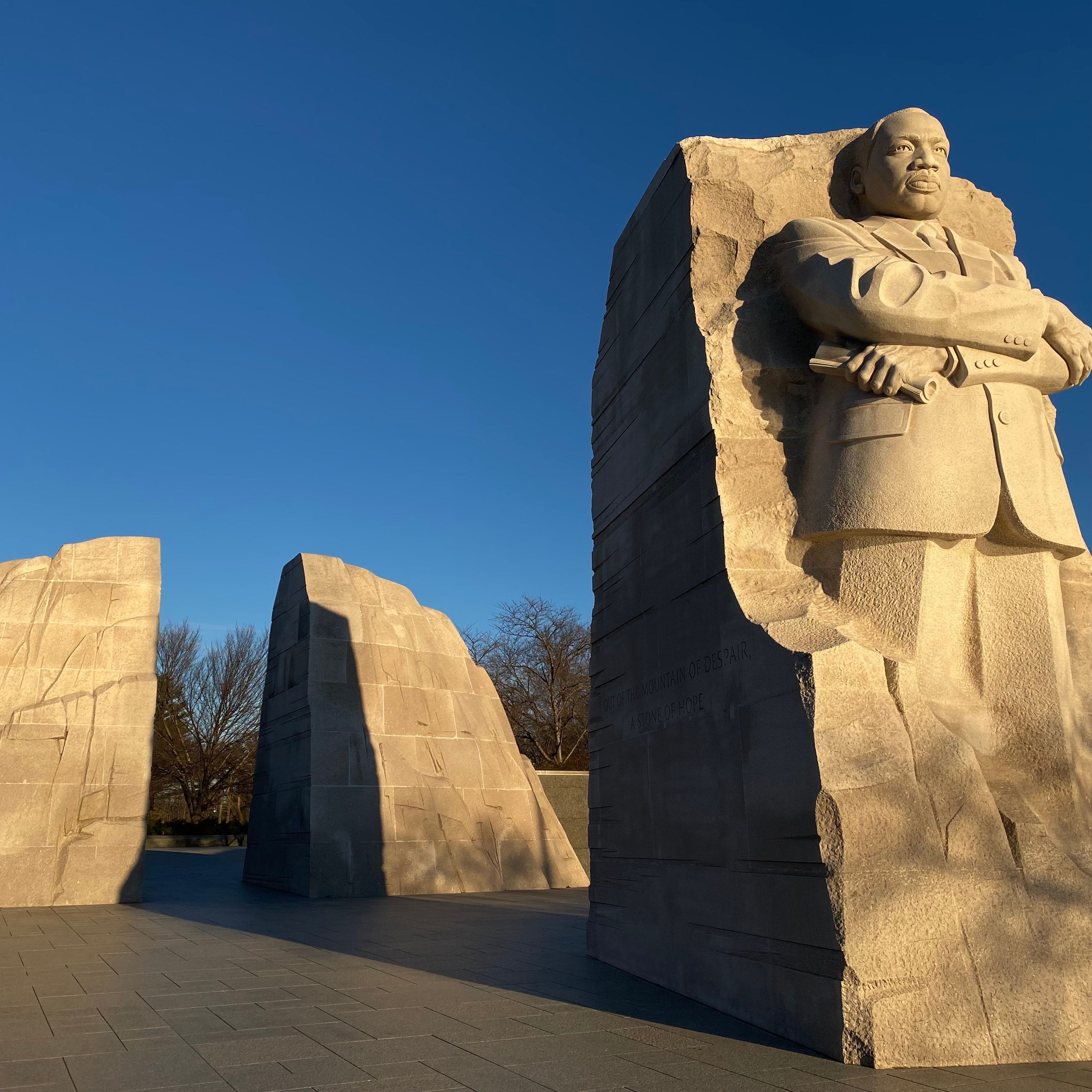
Breakfast My dear guide, Holocaust survivor and "Ritchie Boy" Stephan Lewy liked to respond to the question, "Where does hate come from?" by answering, "the breakfast table". Likewise, it can also be a great way to start the day anew.
Our breakfast speaker was the remarkable Adar Cohen, originally from Keene. We had an honest, open, and thoughtful discussion dealing with anger, isolation, fear, and sense of powerless given the current polarization and violence. I was reminded about the power of engaging people where they are and about judging less. “Conflict loves speed” Adar reminded us. I will slow down.
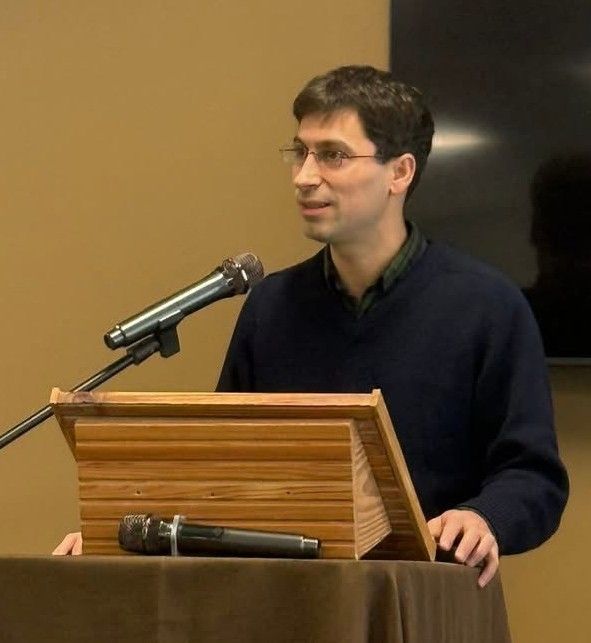
Labels I was going to write about ICE and the fight against civil rights. Instead, I'll write about moving forward as community. I have taught that labeling people sets up a dangerous dynamic. Yes, we want to identify unjust actions but how we do it is important. Once I throw a label at someone the options disappear. I may even make that person become the one I just labeled him. I have learned to listen more and justify less. Listening, in respectful humility, allows me to grow and also hear why others are doing what they do. Really, I have found that listening (not judging or evaluating) creates a common space for growth and discussion. Although I may disagree with them or their actions we cannot build a better future - let alone present - without respect.
Patience I have often talked about the student who tried to silence my presentation by yelling “Proud Boys Rule” and my instinctive response (helped by listening to an FBI hostage negotiator the night before) to listen, rather than to label and condemn. He was angry, fearful, and wondering about his future. I was in a privileged position. And yet, he and I, because of mutual respect that developed by listening to each other, came to a different and better place. Often, we discover that we share the hope of safety, dignity, and the ability to express oneself to someone who will listen. We must listen first, connect to things that are outside of our comfort zone, and trust that we have more in common than that which obviously separates us.
We all have social connections and individual talents. We must work tirelessly on the things we can control or have influence over. If we get distraught, frustrated, or overwhelmed because there are things beyond our control, it is OK to let it go. We can only do what we can do - and we must focus on that. That helps us to be less defensive and hear statements as questions. That opens possibilities.
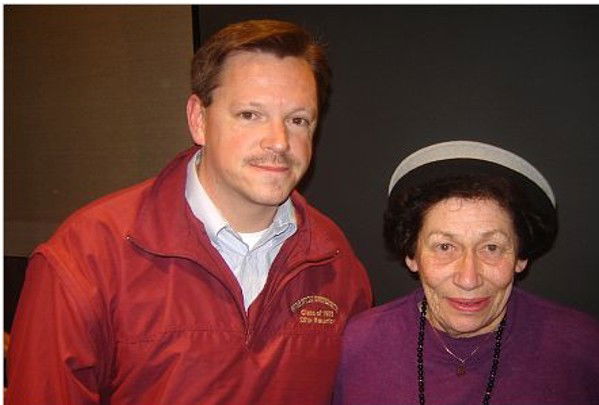
Hannah Pick and Kati Preston As a Holocaust educator listen to stories and experiences that are not mine – nor would I dare to claim to understand them. Instead, I grow when I witness. This will be a focus of the book I am currently working on. I remember being at Yad Vashem in Jerusalem with an angry colleague seeking to justify his anger, sense of victimization, and need for vengeance. We were talking with Anne Frank’s friend Hannah Pick (“Lies Goosens” in Anne’s diary). As I listened to his query to her about “how did you get your revenge?” I saw someone in need of answers and little room for questions. He was not given the answer that he expected and wanted.
Hannah responded, kindly, calmly, and with a smile, “I had children”. I'm not sure if my colleague really heard her. She was offering a way out of victimization. This assertion, that revenge is to choose life and love, still shapes my life today. Admittedly, I do enjoy it when my hidden child friend Kati Preston puts it a little differently, “Every time I had a child it was like giving the finger to Hitler” she likes to say.
Anne Frank and Martin Luther King were both born in 1929. Each were murdered by white supremacists. It is easy to tap into anger but more important to build a future.
Nonviolent Confidence The Civil Rights movement succeeded because it choose nonviolence as both a tactical and strategic approach. One cannot fight hate and power with either. In our democratic life we must choose dignity. It is not, as Adar stated, simply about smiling or giving out flowers. However nice that may be, we need to do more and act strategically with our convictions. If we listen, engage eye to eye with curiosity, and accept that the work is not easy, then we can build a common ground, a space where education, not self-defensiveness, can happen.
Teachers instinctively know this. We must be constantly reminded that it is true. Rather than ask, why are you doing this? We can ask, what is important to you? What is one thing you’d like to tell me about yourself? In one conversation with a student, he prefaced his comments by saying, “Are you going to cancel me” if I speak? I reassured him that I don’t do that. My response was defensive, but I was also curious. I asked him why he felt that way rather than trying to convince him he was wrong. We had a wonderful talk.
My Turn If we want to build Dr, King’s vision of a “Beloved Community” we have to listen more and judge less. Nonviolence is not just being nice, it is a strategy to illuminate how destructive and self-destructive violence is. To build something better we must take care of ourselves. We must build and expand safe spaces where difference is OK. We must reach out to offer dignity and allow people to step away from a defensive identity cycle that limits their options. We must get beyond ourselves to discover our own supportive communities. Our Beloved Community must thrive on the questions it asks, the diversity it embraces, and the opportunities it offers that we had never imagined.