Bedford Falls or Pottersville?
In a November interview with Nicholle Wallace he said the great American question the series raised was “Where do you want to live, in Bedford Falls or Pottersville?” Ken Burns stated it clearly, “I want to live in Bedford Falls. I don’t want to live in Pottersville.” We actually have a choice.
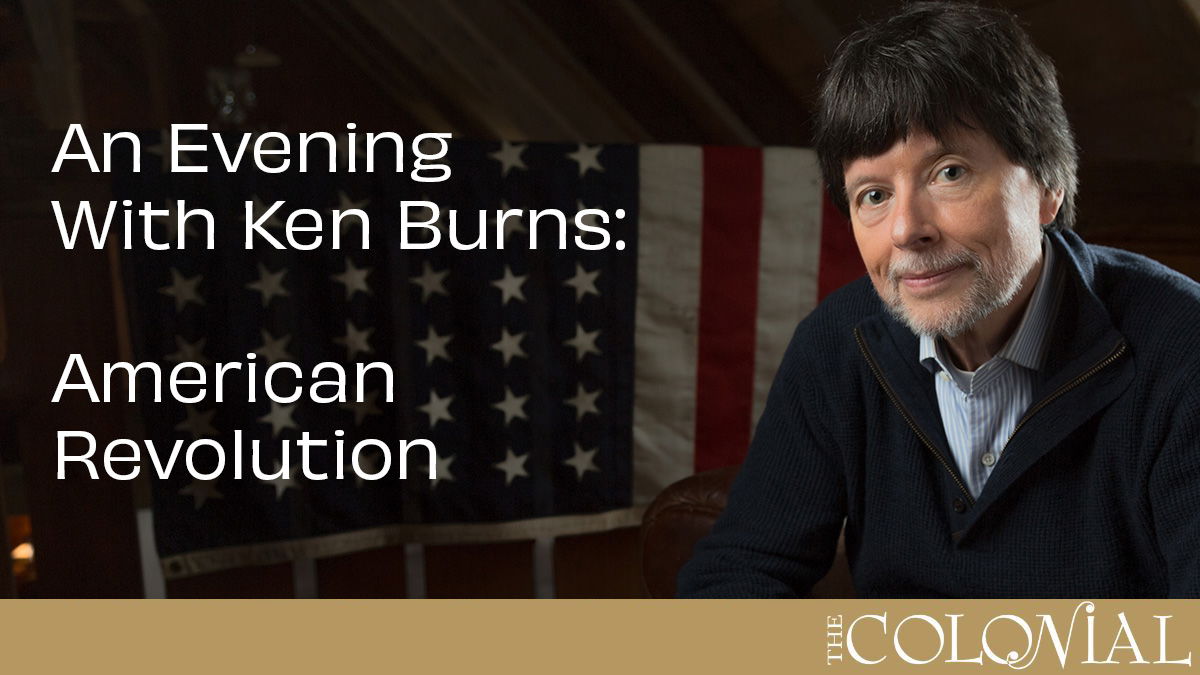
Ken Burns I would like to use this entry to remind us of who we can be and to also honor those who gave so much to fight fascism. I am grateful for Ken Burns. His film on the American Revolution reminds us of our struggle to aspire to something better than being subjects - to seek human dignity rooted in democratic freedom. He reminds us of what we aspire to and how complexity can be held and used to challenge us. He shows how we must continually ask questions of ourselves and not avoid the contradictions.
Complexity We are all vulnerable and in need of support and help. Art and movies can challenge us. It can allow us to imagine and rethink realities. It adds complexity so that we do not just accept simplistic narratives. In Frank Capra’s “It’s a Wonderful Life” there is temptation to see it as a simple, escapist morality tale with a happy ending. And yet, we know there is much more here. This is a story of problems people face (as individuals or as immigrants), every day struggles, setbacks, loneliness, helplessness, frustrations, and joys. We see that joy and “wonderfulness” emerge only in the context of others – getting outside of ourselves and recognizing every person who adds to the fabric our lives.
Bedford Falls In Frank Capra’s “It’s a Wonderful Life” we are introduced to Bedford Falls (shout out to upstate New York where my son went to college). People face (as individuals or as immigrants), every day struggles, setbacks, loneliness, helplessness, frustrations, and joys. At first, George Bailey (Jimmy Stewart) feels increasingly trapped, his dreams smothered, as the demands and responsibilities of life keep asking more of him. The joy and “wonderfulness” emerge when George comes to realize that his life and self-worth is tied to the common purpose of others – family, colleagues, spouse, and those who depend on him.
Pottersville The loneliness and despair that is Pottersville is produced by the desires and power of one man who seeks power by destroying social bonds that bring meaning and joy to life. As he "wins" we lose. We can see that Potter’s greed for power, wealth, and materialism make him a lonely man. Adding to the complexity and violating the screen code at the time we never see what happens to Potter. At the time, the code required redemption or prison. But this was not the point. It's a movie about dignity and responsibility. Do we accept an amoral universe where the powerful dictate our choices or do we live with a common purpose, bound together in a complex social contract rooted in decency and hope? It is interesting to note that the FBI (and maybe society at the time) missed all of this because they felt threatened by the movie's seeming attack on capitalism and reduced it to a Hollywood “communist” plot to undermine the spirit of the nation. So much for the ability to think with complexities.
Jimmy Stewart, Combat Veteran This is one of the things the main characters played by Jimmy Stewart and Donna Reed discover. This was Stewart’s first film after serving in World War II. His service and sacrifice was noble but came at a cost. He had flown twenty combat missions and in 1944, over the German city of Gotha, lost members of his crew. A hole had been blown under his pilot’s chair, and he got his plane home through at least twenty degrees below zero temperatures. He had lost men he felt responsible for and had come home with a mixture of survivor’s guilt and post traumatic stress. He had fought the Nazis but was life still wonderful? How many veterans wondered the same thing?
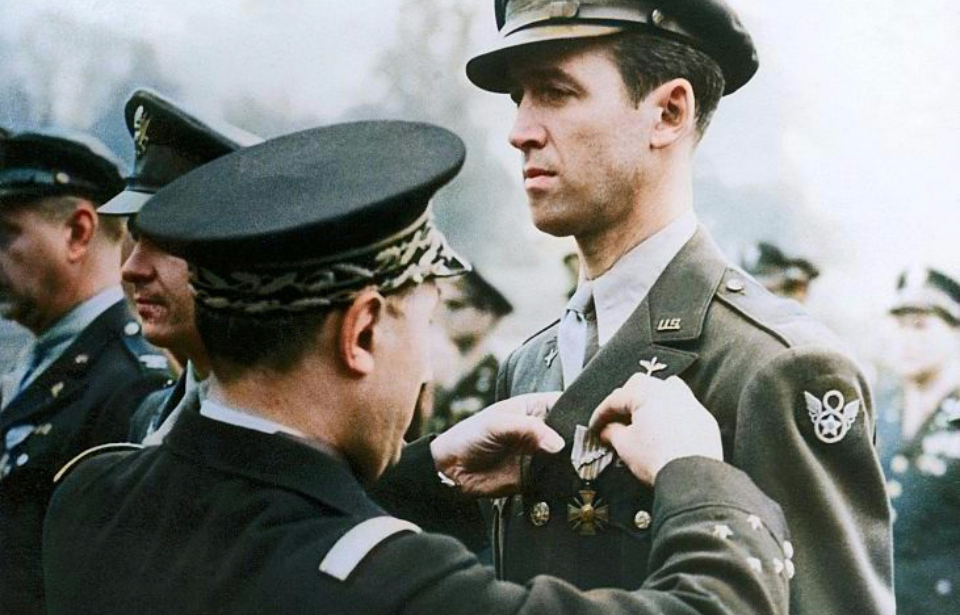
George Bailey is trapped in his hometown in ways that echo Stewart’s broader entrapment to his wartime experiences. The story’s climax occurs when Bailey faces absolute despair and sense of worthlessness when he realizes, through the input of the self-centered and greedy Potter, that he is worth more dead than alive.
The utter despair Stewart portrays when his world seems to be crashing down was real. It transcended film and life because he was suffering from post-traumatic stress. The most powerful part of the film, as he destroys his living room and leaves his home in despair, was done in one take. What you see is real. As he feels that he has failed himself, his family, and those who rely on him, he falls into despair that echoed his own life. As George Bailey breaks down, so too does Stewart. The character and the actor became one and thereby enriched both. It is him fighting demons while rediscovering his ability as an actor by tapping into his own deeply personal experience of the war. It is true despair and recovery.
Donna Reed knew that he did not need rescuing, but support. She was his steady rock during the filming. Stewart knew and realized he was not in this alone. He rediscovered his self-worth through the faces and support of those around him. Throughout it, Stewart was thinking of all those who might feel this way. It was his burden of leadership.
Our Future? I think we are becoming more aware of the possibility of a future Pottersville. And that is why we cannot despair. We can move forward by taking care of each other in all of our complex, contradictory humanness. We can be vulnerable and safe. We must live together, or as Ben Franklin said as The Declaration of Independence was signed, "We must, indeed, all hang together, or most assuredly we shall all hang separately."
Together, Forward “It's a Wonderful Life” is the story of people relying on other people and rejecting selfish materialism. Every year I think of those who sacrificed so much to fight against Nazism and for our freedom. I wonder if we are betraying them. I then find the courage to say that I will not. “It’s a Wonderful Life” is the story of overcoming despair with the help of others. This is how we discover our self-worth. Stewart’s real encounter with darkness gives us the way forward, the way to embrace the light of the season.
We find strength and resiliency by thinking about others. That is true whether we watch our government separate and deport people (including veterans) or witness the horrors of Bondi Beach. Evilness comes from those who try to snuff out the light within us or around us. They lose if we rely on each other and accept the difficult proposition that we must face despair to overcome it.
Optimism vs. Hope I am a hopeful person not an optimist. My former students might remember the metaphorical optimist Pangloss (the windbag) from Voltaire's Candide. An optimist ignores negative realities (like the earthquake that destroyed Lisbon, antisemitism...), chooses only to see the good and passively expects things to work out for the best. A person with hope sees the evil, the despair, the pain and suffering but insists that we must and can do better. "The American Revolution" and "It's A Wonderful Life" challenge us to hope.
Season of Lights This week, on the first night of Hanukkah (Festival of Lamps/Lights) Jews were attacked and murdered on Sydney's Bondi Beach. Ahmed al Ahmed, a Muslim whose refugee parents had just arrived from Syria, wrestled one of the guns away from the younger attacker and was shot twice himself. He was a light in the darkness.

During this holiday season where out towns and homes are brightened and made more beautiful by various lights, we embrace each other with love and hope. We bring light into the world by rejecting hate, antisemitism, and despair. When Jews or any group is targeted all our freedoms are attacked. We must be the voices that provide hope and leadership by embracing, with confidence, democratic values that dignify life.
My Turn "It's a Wonderful Life" is a story of hope focused on the rediscovered strength and resiliency. And that is why we cannot despair. Like Stewart and Reed we must rely on each other to rediscover our worth. We must take care of each other in all of our complex, contradictory humanness. We cannot target each other as enemies nor tolerate those who tell us to do so.
Each time I watch Stewart break down as George Bailey I tear up. (Let's not even talk about the ending!) I am reminded of all those who sacrificed so much, fighting the Nazis or the enemies of freedom, and I hope that I do not betray them. I then find the courage to say that I will not.
I see his, mine, our vulnerability and know that the Potters of the world cannot win by attacking and exploiting it. We must recognize our mutual vulnerability, help and not label, and resist tyranny. Stewart’s real encounter with darkness gives us the way forward, the way to embrace the light of the season.
And so, to quote Elie Wiesel, we have the duty "to reject despair". We do that with honesty, courage, and mutual dependence. “It’s a Wonderful Life” because of those around us. The Christian story of the Nativity is all about vulnerability - of refugees seeking shelter. We light a candle when we refuse to accept the brutality of Bondi Beach or the vileness of our government when they separate and deport people (including veterans) or accumulate wealth and power at the expense of others.
Evilness comes from those who try to snuff out the light within us or around us. They lose if we rely on each other and accept the difficult proposition that we must face despair to overcome it. We must bring the gift of ourself to the manger and to those seeking warmth and dignity.