Holocaust Education: The Kids are Alright

The Next Generation I have the duty and privilege to speak to audiences about the Holocaust, mass atrocity prevention, and human rights. You need to know that wherever I go, I’ve met receptive, thoughtful, and perceptive audiences – many of them young students. I can only share my experiences that are unique to me, but it's important to know that the kids are alright.
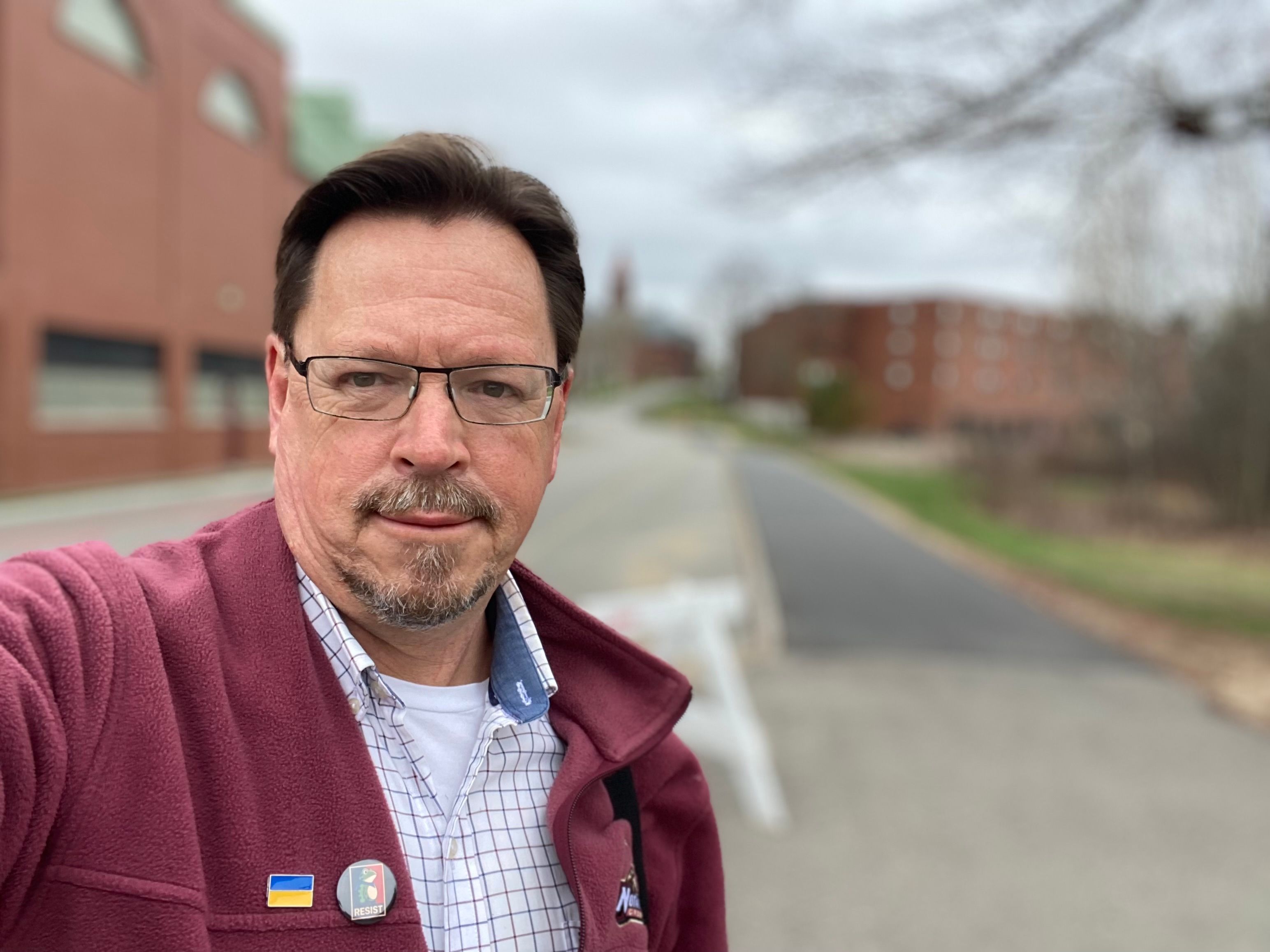
Confronting the Past I present on a variety of topics from the Rise of the Nazis to my survivor friend's movie Hidden: the Kati Preston Story. Check out the list on the website and see if any would be interesting for your school or town! This week (from NY to NH) I was presenting on "Eugenics: Bigotry Disguised as Science" and "The Ongoing Threat of Fascism". I had wonderful colleagues invite me to speak and I'm grateful for all that they do. Holocaust education is important and relevant as it raises crucial questions for everyone.
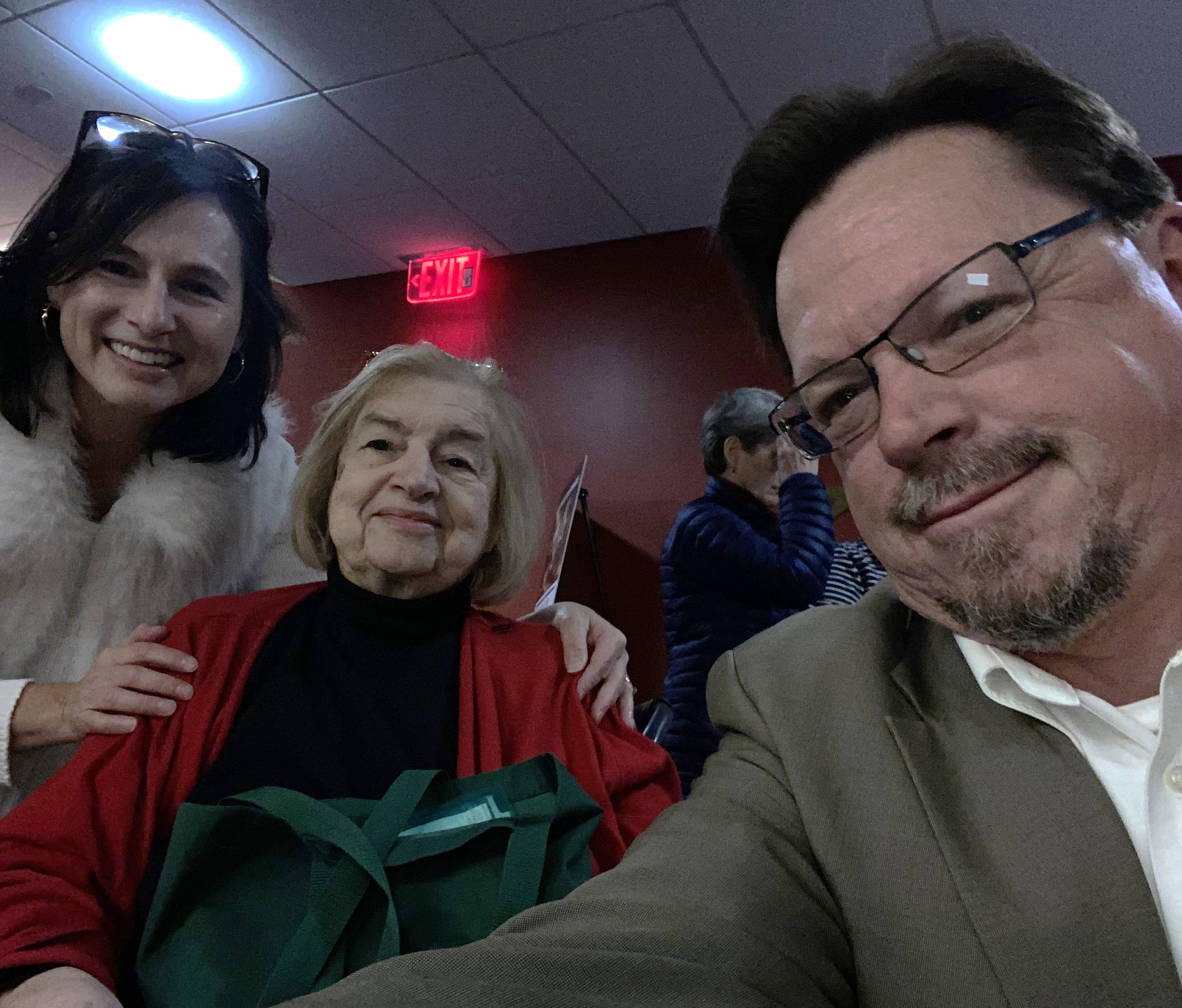
Below: With Producer Jody Glover, and survivor Kati Preston at a showing of Hidden: The Kati Preston Story.
But there are those in positions of influence or power who are afraid about asking those questions, who defend their fragile sense of self by challenging our right and duty to explore history, and even label it as “divisive”. Teachers and public education are under assault by people who want history to comfort them, reassure them, and isolate them from its challenges. It's a losing proposition that the younger generation doesn’t seem to buy into.
The Next Generation Students consistently reject the cowardice, defensiveness, lack of curiosity, and lack of imagination of those who target learning. They instinctively know how counterproductive that is. Knowing what's at stake (the environment, justice, wealth inequity, racism, corruption, and the fabric of freedom...) they're ready to face the difficult tasks that are ahead and are looking for guidance. They remind me of FDR's "missionary generation" that sought solutions and not self-pity. We can't put the burden on them but we can see them as partners.
I’ve yet to be in a situation where the students aren’t curious and engaged. They know what they see and hear every day and aren't willing to accept it. They’re looking for ways to raise questions and take responsibility for what comes next. Sometimes, they reduce things to labels to articulate and justify their wrestling. They’re also quick to recognize the limits of this when it’s pointed out to them. They want to get it right. Labels are a starting point to open questions and not the conclusion. If I label something or someone as racist or antisemitic, for example, that’s who they are. There’s no space for growth or self-awareness, only retrenchment. Instead, we can teach empathy and inquiry in our shared democratic life.
Empathy Often hate is an expression of powerlessness, fear, and manipulation. Sometimes it’s not - and that’s different issue. But when confronted with fear and anger it’s important to listen and not judge. What’s happening in that person’s life that makes them spout hate – that sometimes they don’t even understand? How do we help them grow away from destructiveness and ultimately self-destruction? We can't do it by ignoring each other or segregating ourselves and our ideas.
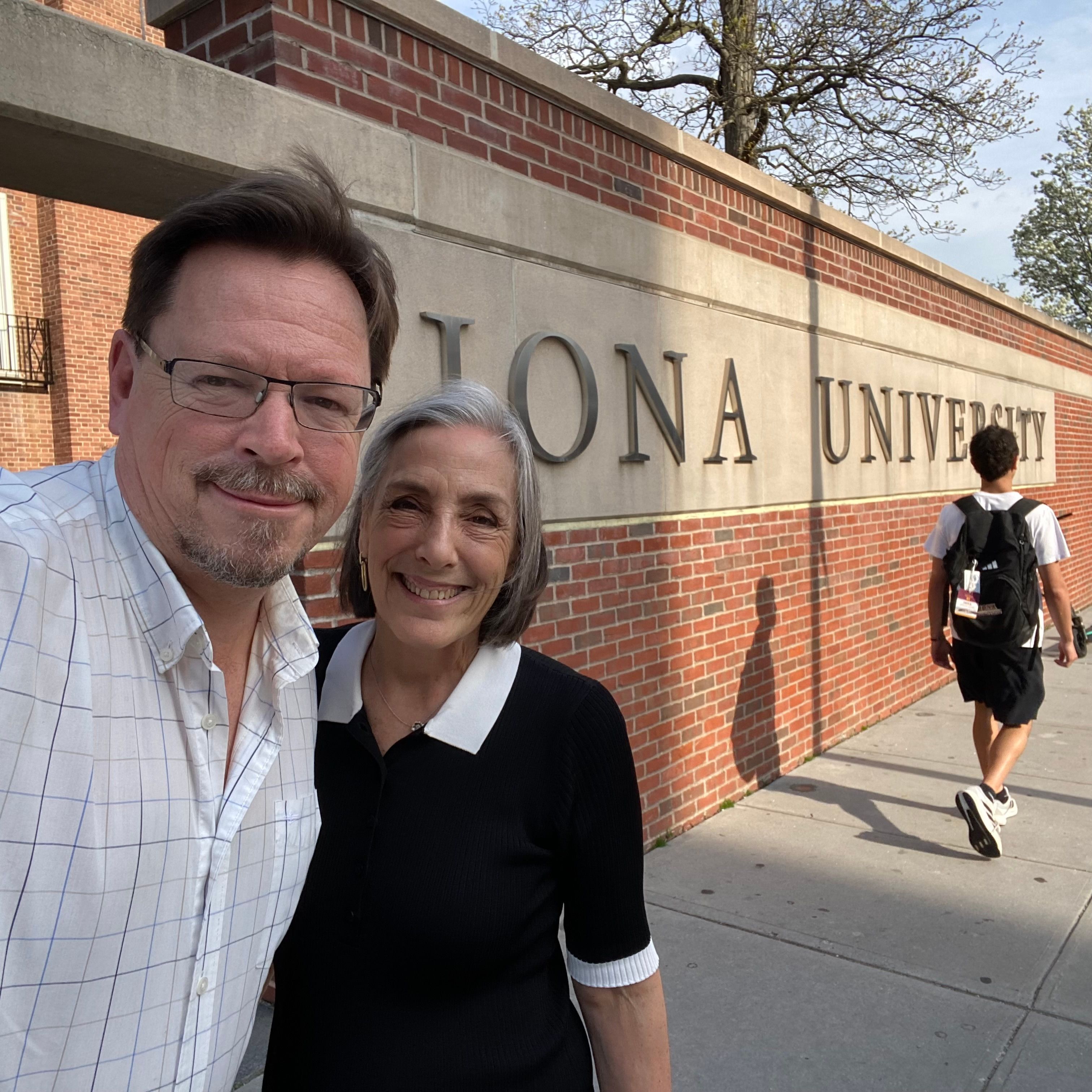
Education Students are seeking answers and solutions in the right way. We can be grateful for our teachers whose sense of duty to them, and the Republic, are to be supported, honored, and cherished. Educational space is the key for healthy democracies to raise the right questions, take accountability, dignify others in their circumstances, and seek solutions that are just. Confronting difficult history empowers, strengthens, and develops resilience and confidence. My model, as I've mentioned before, is Martin Rumscheidt. I was reminded of my friend this week while presenting at Iona University in conjunction with the Holocaust and Human Rights Educational Center of White Plains, NY. (HHREC)
Below: With friend, AHO Board colleague, and Executive Director of HHREC, Millie Jasper.
Confronting the Past with Courage Martin grew up in a Nazi household. His father was an IG Farben executive and it was only after the war that Martin had to confront his own family’s past. He did it not through guilt (he hadn’t done anything) but with shame. He wanted to know “how much of my father is in me” and how to take responsibility for those who were targeted. He faced a deeply personal and painful past by reaching out to the victims. If he could, who are we not to? All that awaits us if we examine the past is potential freedom and liberation from self-destructive hate.
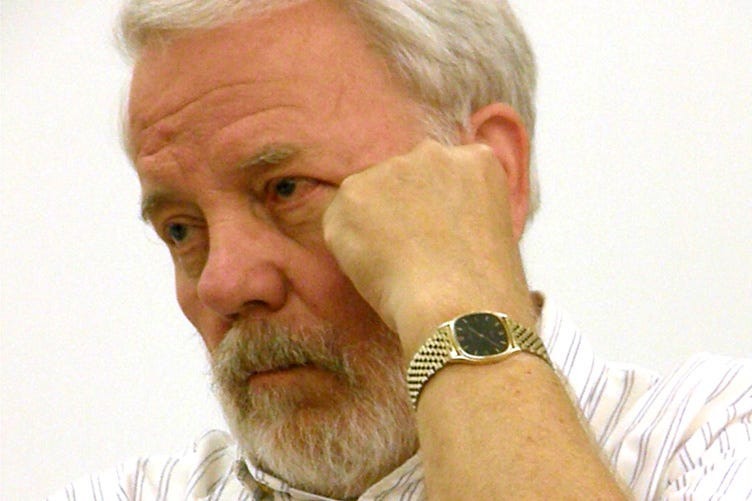
A survivor, or daughter of a survivor (my memory isn’t quite clear). asked if he would accompany her back to Auschwitz. She would only go with him. He did, and together they walked into the world’s largest graveyard - after a pause. She couldn’t cross the threshold. He held her hand and said they’d go in together. As the day passed, they separated. He found himself in a part of Birkenau where his father likely worked seizing forced laborers. He was frozen. This time, she found him and held his hand as they made their way as the sun set. The way he retold it matters: “The German brought the Jew back to Auschwitz. The Jew brought the German out.”
Escaping Hate I often think of what this means. Literally and figuratively, Martin escaped the past through the help, a helping hand, of the targeted group. It was the face of the other that liberated him. Freedom came from shame and the courage to face and learn from that shame and not be held as a captive victim to it.
Survivors like my friend Kati Preston help students to see that there is life beyond victimhood. Although not a simple binary, it’s a struggle between victim and survivor, of remaining powerless and hopeless, or reclaiming your humanity in the short time we all have.
This week I spoke to many students who were asking thoughtful and deeply complex questions. They know the challenges we’re all facing and are looking for help to guide them along the right paths. We all have the responsibility to help them to discover and articulate what the questions are if they're going to help us find solutions.
Professional Responsibility All of us need to confront the impacts of fascism as we see echoes of it eating away at the foundational structures and values of our American experiment. I was with law enforcement officials this week who were doing exactly that. As public servants they care about helping and protecting their communities. That's a main reason many of them joined up. They were attending a workshop that explored the difficult history of the German police during the Third Reich – not to judge or condemn, but to try to identify how their profession was turned against the very people they swore to protect and serve.

That's why the annual Kristallnacht Remembrances I used to organize were so important. City officials, politicians, police and fire chiefs, were given a platform to publicly assert their commitment to their community and in turn affirm the public's investment in them.
We also have a city-wide leadership coffee group where we can be together and with no agenda just talk about the challenges we all face and how we can support each other. Strength and resilience starts at home. We need to do everything we can to empower institutions and individuals to serve the Republic and not manipulate or undermine them for political gain.
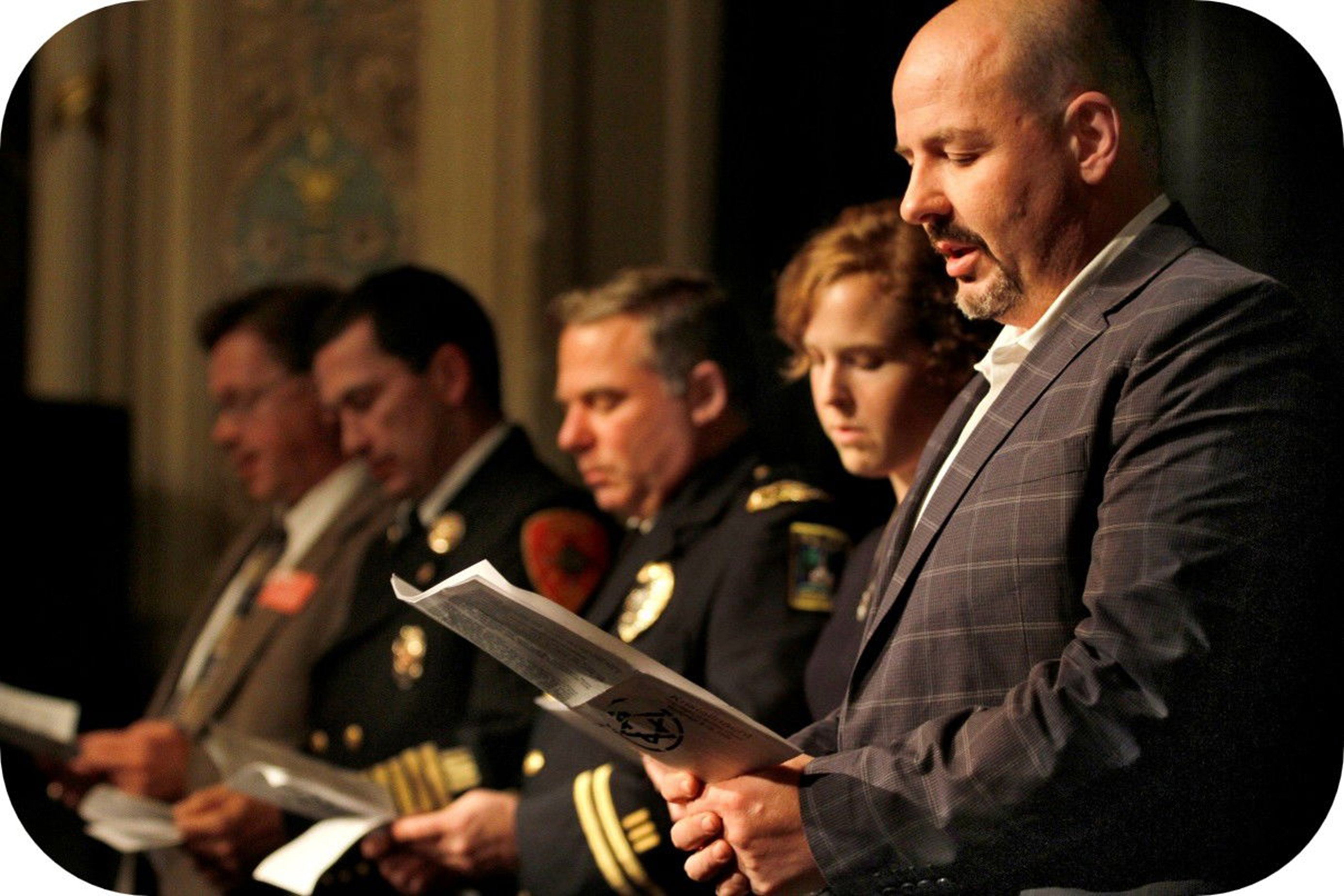
Each profession needs to continue to do this. As they raise important questions they rediscover that democratic life, checks and balances, and working withing the framework of our Constitutional system gives all of us the best chance at finding happiness and dignity.
My Turn I've been wanting to write this post for awhile. There are so many good people doing the right thing and motivated by trust in and love for our constitutional way of life. Sometimes we despair and that's understandable. But there is so much more that is good despite the assaults on reason and responsibility. Much of that good can be seen in the next generation. They get it and are asking important questions. They are rejecting the hate and manipulation in much the same way that the FDR generation rejected the greed and corruption of their time. They are seeking solutions.
Helping students to see the corrosive effect of hate and antisemitism allows them to identify racism and bigotry. We need to stop fearing discussing the important issues. Teachers need our support because they know exactly how to do that. They create safe "enough" spaces where identities can be strengthened and diverse ideas can be discussed and debated.
Many teachers have this week off with a well deserved but unpaid vacation. We hope they get recharged and be reminded by all of us how important they are to our students and our communities. We'll be alright as long as we embrace the power and importance of education and educators to build virtue.