Season 2, Episode 18: A Revolutionary Reminder for Memorial Day

Listen Here:
Memorial Day On this Memorial Day it's important to revisit who we are and what we've fought for over the past 250 years. We must honor the sacrifices of our servicemembers even while they're betrayed and manipulated as props by those in power. Their victory over fascism and the building of a new world order afterward are under assault from a political leadership profiting from their attack on the international order. Our leaders have supported dictators and rejected and undermined democratic ideals and institutions. We've become aggressors (Venezuela, Iran...) sacrificing and risking our troops without Congressional approval or oversight. Elon Musk and the president have slashed a third of the State Department and Foreign Operations budget (specifically USAID) and we're seeing the spread of Ebola and the deaths of many as a result. We are less safe and secure. We've been betrayed.
Therefore, it’s the perfect time to remind ourselves what our revolution was about and honor our servicemembers by reclaiming its values and ideals that are important for us and the world.
I’m going to focus on the Declaration of Independence both to give it some context and to legitimate our resistance to the corruption we're currently facing. Our revolution was born out of fears of religious wars and the desire to be free to pursue our own happiness and safety. It was a starting point with many twists and turns since.
What we’re realizing now is that the forces that compelled our separation from monarchy are similar to the ones that require our resistance to the outrages of tyranny today.
Freedom from Religious Identity One of the first tyrannies that American colonists sought to overcome was the destruction that could be caused by religious intolerance. Earlier settlers had fled religious persecution, and the thinkers of the age were deeply concerned with the devastation of the Thirty Years’ War (1618-1648) – a vicious Christian civil war in Europe that killed approximately 8 million people. The Treaty of Westphalia that ended the conflict supplanted religious identity with the new idea of state sovereignty and territorial integrity. It also codified religious freedom and the freedom not to be religious. Antisemitism continued to be a problem
The 1st Amendment Freedom of Speech is an outcome of this new way of thinking. America was not to be a Christian (or any other religion) nation but one free to allow people to pursue their faith or lack thereof in private.
Although I’m about to talk about the Declaration, it’s important to note a document Jefferson wrote nearly a decade later. The Virginia Statute for Religious Freedom was the precursor to the 1st Amendment. Enshrined in this statute was the guarantee that people could not be forced to support or become part of any religion.
And so, our revolutionary idea was to protect religious freedom and the right not to participate in religion. It's fundamentally against our revolutionary ideals to attack any religion or to forcibly impose or promote one. Separation of church and state is where our freedom begins.
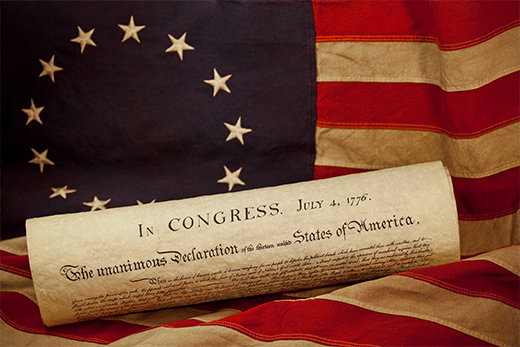
Grievances In the Name of Freedom The Declaration of Independence was the articulation of wrongs to freedom done by the person of King George III. It was a transparent argument for the world – specifically the British people – to read and ponder how a single person can be corrupted by power. Rooted in the values of the Enlightenment it sought human happiness and freedom through the sovereignty (the right and authority to govern) of the people not the unaccountable whims of an individual who claimed sovereignty as king. I hope you see what I'm getting at.
Even though Jefferson stated that “We hold these truths to be self-evident, that all men are created equal, that they are endowed by their Creator with certain unalienable Rights, that among these are Life, Liberty and the pursuit of Happiness” there was, as Ken Burns articulates, nothing “self-evident” about any of these claims.
Informed by the Thirty Years’ War It's important to note how the Declaration was justified by references to the Thirty Years’ War. Sovereignty was now a responsibility and this echoed the new international system created by the Treaty of Westphalia. There are direct references to the war that includes the rejection of: Quartering large bodies of armed troops among us; transporting large Armies of foreign Mercenaries to complete the works of death, desolation and tyranny, already begun with circumstances of cruelty & perfidy scarcely paralleled in the most barbarous ages (The Thirty Years’ War). The use of mercenaries as well as inciting domestic insurrections were common practices and outrages committed during that war that led to indiscriminate killing.
Echoes of Tyranny Today And now it’s time to address our current challenge to our sovereignty. It's stunning to realize that the charges leveled against King George III could also apply to President Trump. Consider the Declaration's indictments of the king that seem to echo:
- Forbidding naturalization of foreigners [Today: attacks on birthright citizenship]
- Restriction on migration
- Undermining the Judiciary by making them dependent on the will of the king [Today: the corruption of the Supreme Court]
- Creating new offices to harass the people and steal from them
- Keeping armed forces in peaceful communities without the approval of legislatures [ICE]
- Protecting people from punishment for any murders which they should commit on the Inhabitants of these States [Pardon of January 6 attackers and a slush fund to reward their criminality]
- Cutting off our trade with all parts of the world [Illegal tariffs]
- Imposing taxes on us without our consent [Illegal tariffs]
- Declaring us out of his protection and waging war against us.
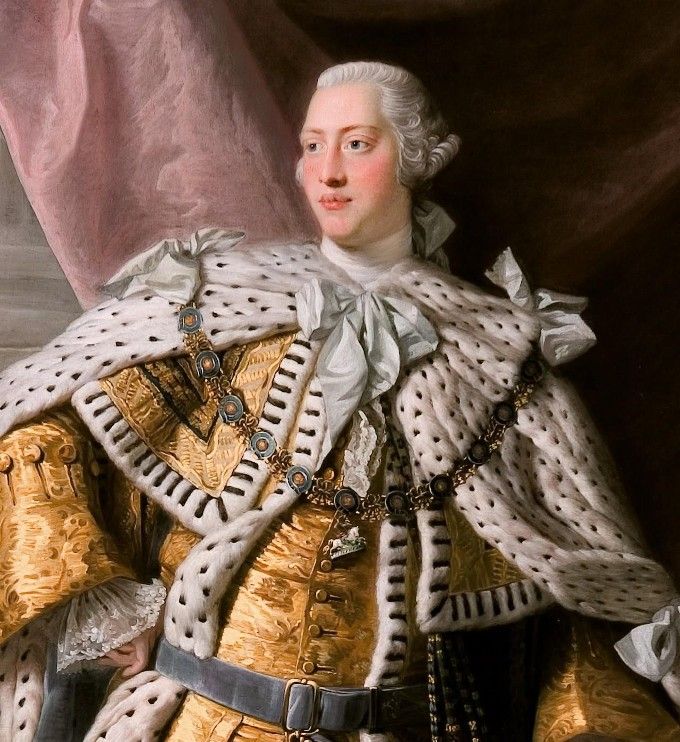
In essence, the Declaration argued that the king had abdicated his sovereignty, his right to rule, by his actions. Interestingly, it's how genocide prevention thinkers wrestle with the problem of states committing atrocities against their own people. The Treaty of Westphalia protects state sovereignty which is why the Nuremberg Trials only charged perpetrators for actions taken outside of Germany's borders during wartime. Genocide scholars argue that governments that target people within their borders or are unable or unwilling to protect them have given up their sovereignty. Therefore the international community can respond to protect people without fear of violating state sovereignty.
These are ideals rooted in law and the revolutionary idea that sovereignty lies with the people. A tyrant “is unfit to be the ruler of a free people”. None of us are above the law and all must be held accountable to it.
My Turn We're witnessing corruption in all three branches of government. The Judiciary and federal law enforcement's ability to act and rule independently has been undermined. I'm arguing that our current government has intentionally violated our national charter. I oppose violent resistance (something advocated in the Declaration) because we have the right to vote and determine our future at the ballot box. That's what 250 years of history and sacrifice has gained for us.
Our rights to life, liberty, and the pursuit of happiness should not be infringed by gerrymandering; ICE; federal corruption; violations of the emoluments clause; extra-legal private prisons and detention warehouses; separation of families and deportations without due process; illegal tariffs; wars of aggression; the dismissal of conflicts of interests for the ruling family that allows them to use the public trust to enrich themselves; and limiting access to health care and education. Our government should honor and protect allies not praise dictators. Any monuments paid for by public funds or erected on public land should represent our public ideals, sacrifices, and accomplishments not the vainglorious and brittle pride and vanity of a would-be dictator.
We're going to have to write new laws such as making it illegal to intentionally lie to the public (other democratic countries have done that) and, unlike the last time, hold potential criminals to account through due process. We must indict those whose actions stand in contrast to our founding ideals and violate the rule of law. If you've seen the recent polling, Americans are understanding that something is wrong and the political system is beginning to respond.
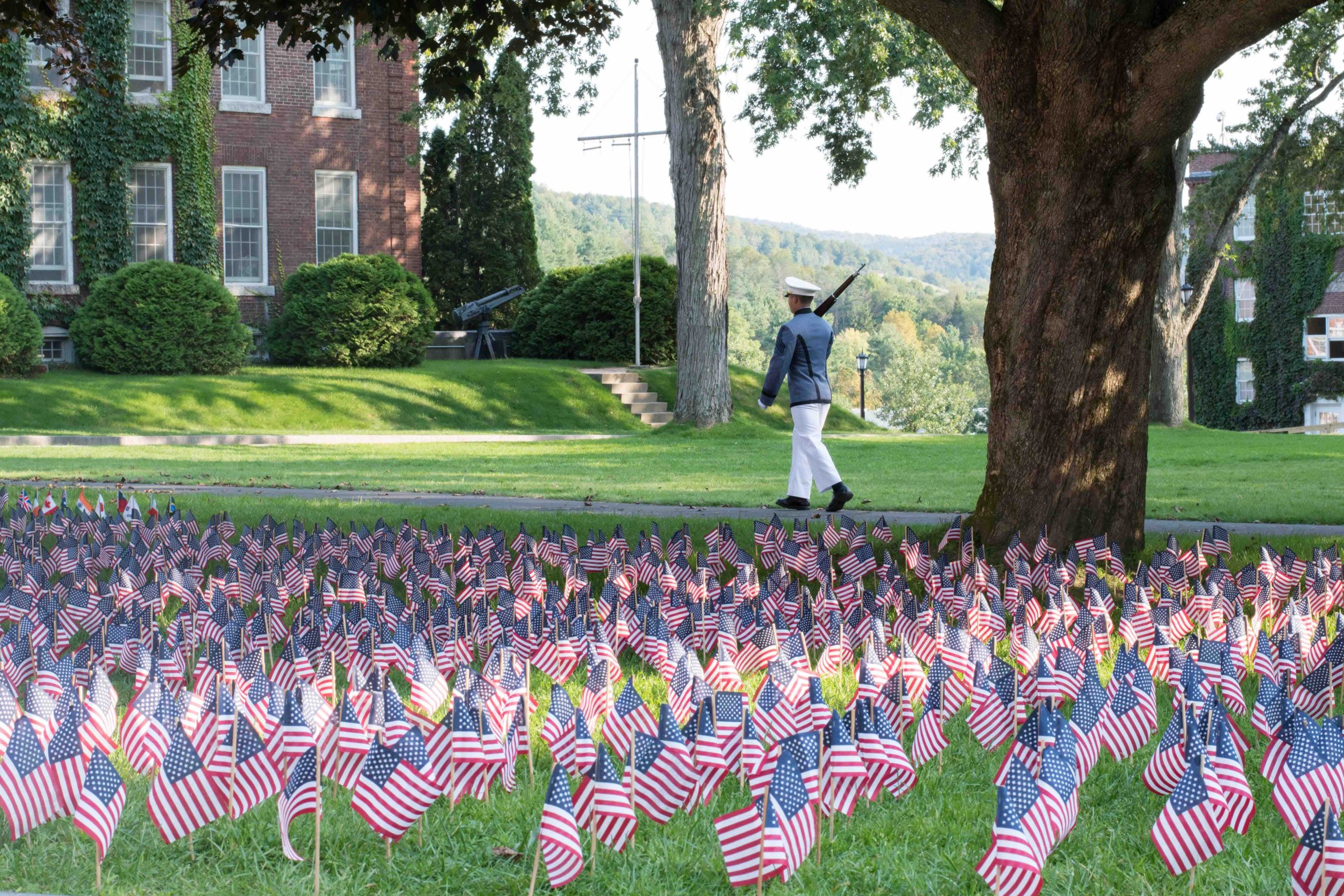
Understanding the awesome responsibility we've been given by our founding documents, the example of patriots, and the sacrifices of so many, we can honor them on this Memorial Day by recommitting to our ideals. I'd like to especially acknowledge the service and sacrifice of members of my alma mater, Norwich University. Essayons.
Below: Norwich University's Upper Parade ground.
Let's embrace the hope and idealism that offers the world a different way forward. We dare not give in or collaborate with tyranny. On this Memorial Day we remember that too many have sacrificed too much for us to let that happen again.